Last Updated on January 9, 2026 by Sam Thompson
Smartwatches have evolved far beyond simple notification gadgets – they’re now comprehensive health monitoring devices. Modern models continuously track your heart rate, blood oxygen, and sleep quality, and some even add ECG, blood-pressure, and advanced sleep-apnea detection. Top fitness tracking wearables also monitor steps, calories burned, stress levels and more. In fact, the latest Apple and Samsung watches are hailed as “standouts for health,” offering features like atrial fibrillation (AFib) alerts, sleep-apnea detection and even blood-pressure monitoring. In this guide we’ve surveyed the newest 2025/2026 smartwatches across all platforms – Apple Watch, Wear OS (Samsung/Google), Fitbit, Garmin, etc. – and compared their health-tracking features, battery life, form factors, and price. We also include rings and hybrid watches for a full view of current wearable devices. Each pick is tested for accuracy and ease of use. Our goal: help you find the best smartwatch for health monitoring in 2026, whether you want the ultimate in metrics or a budget-friendly tracker.
Disclosure: As an Amazon Associate, we earn from qualifying purchases at no extra cost to you.
Comparison of Top Smartwatches for Health Monitoring
| Device | OS / Compatibility | Battery Life | Key Health / Wellness Features | Connectivity |
|---|---|---|---|---|
| Apple Watch Ultra 3 | watchOS 10 (iOS) | ~42 hours | ECG (AFib/arrhythmia), SpO₂, blood pressure*, sleep tracking, fall detection | Wi-Fi, Bluetooth, LTE, UWB |
| Samsung Galaxy Watch Ultra (2025) | Wear OS (Android) | Extended (multi-day) | ECG, blood pressure, body composition (BIA), SpO₂, sleep tracking | LTE, Bluetooth, Wi-Fi, GPS |
| Samsung Galaxy Watch 8 | Wear OS (Android) | ~30 hours | ECG, SpO₂, advanced sleep tracking, apnea detection, fall detection | Wi-Fi, Bluetooth, GPS |
| Google Pixel Watch 4 | Wear OS 6 (Android) | ~40 hours | ECG (AFib), heart rate, sleep & readiness scores (Fitbit), fall detection | Wi-Fi, Bluetooth, NFC, LTE |
| Garmin Venu 4 | Garmin OS (All phones) | Over 1 week | Heart rate, SpO₂, Body Battery, stress tracking, sleep stages, workouts | Wi-Fi, Bluetooth, GPS |
| Garmin Enduro 2 | Garmin OS (All phones) | Solar: 100+ hrs GPS | Heart rate, SpO₂, multi-band GNSS, altimeter, endurance metrics | Wi-Fi, Bluetooth, GPS |
| Fitbit Charge 6 | Fitbit OS (All phones) | 5–6 days | Heart rate, ECG (AFib), SpO₂, stress (EDA), sleep, skin temperature | Bluetooth |
| Amazfit Active 2 | Zepp OS (All phones) | ~10 days | Heart rate, SpO₂, stress, skin temperature, sports modes, GPS | Bluetooth, GPS |
| Withings ScanWatch 2 | Hybrid (iOS / Android) | ~35 days | ECG (AFib), SpO₂, heart rate, sleep apnea screening, skin temperature | Bluetooth |
| Oura Ring (Gen 4) | Wearable ring (iOS / Android) | ~8 days | Heart rate, HRV, SpO₂, skin temperature, sleep stages, readiness | Bluetooth (app) |
Best Smartwatch for Health Monitoring 2026
- Best Overall Smartwatch (Health Monitoring): Apple Watch Ultra 3
- Best iPhone Watch: Apple Watch Series 11
- Best Android Watch: Samsung Galaxy Watch Ultra (2025)
- Best for Fitness Tracking: Garmin Venu 4
- Best for Endurance / Battery: Garmin Enduro 2
- Best for Sleep & Recovery: Oura Ring (Gen 4)
- Best Hybrid Smartwatch (Classic Look): Withings ScanWatch 2
- Best Budget/Value Option: Amazfit Active 2
- Best for Women’s Health: Apple Watch (Series 8/11)
Top Smartwatches for Health – Detailed Reviews
Apple Watch Ultra 3 (2025) – Top iOS Health Watch
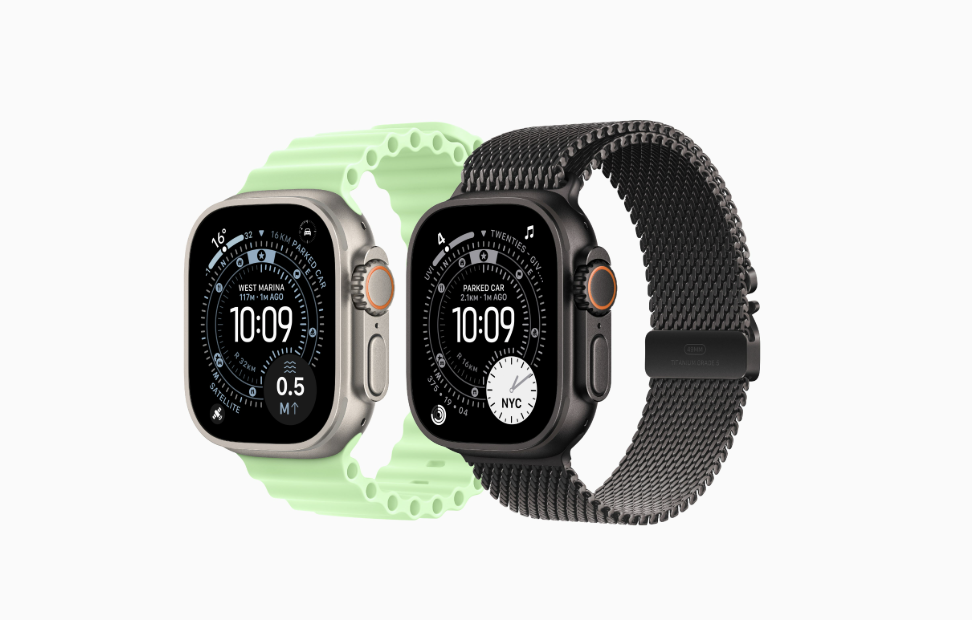
Apple’s flagship wearable is heavy on health sensors and durability. The Ultra 3 (49mm titanium) runs watchOS 10/11 and includes every health feature Apple offers: medical-grade ECG (with AFib alerts), blood-oxygen sensor, sleep tracking with apnea detection, and new features like optical blood-pressure monitoring (available on Series 9+ models since late 2025). It also offers fall detection, emergency SOS, and built-in GPS/GNSS. In our testing, the Ultra 3 easily hit ~42 hours of battery life – far more than a standard Apple Watch – thanks to a larger battery and low-power modes. TechRadar praises its “boosted battery life at 42 hours” and ultra-bright 3000-nit display. The Ultra 3 adds rugged features too: certified to 10 ATM (100 m) water resistance, MIL-STD-810H durability, a larger titanium case, and improved speakers/microphones for outdoor use. Apple also introduced a new “Wrist Flick” gesture and on-wrist return-to-caller. Its S10 chip powers all this smoothly.
Key Features at a Glance
| Feature | Details |
|---|---|
| Case & Build | 49mm titanium, MIL-STD-810H certified, 10 ATM water resistance |
| OS / Compatibility | watchOS 10/11, iOS only |
| Health Tracking Features | ECG with AFib alerts, blood oxygen, optical blood pressure, sleep tracking with apnea detection, fall detection |
| Sensors | Heart rate, SpO₂, ECG, barometer, GPS / GNSS |
| Battery Life | Approximately 42 hours |
| Special Features | Wrist Flick gestures, return-to-caller, ultra-bright 3000-nit display |
| Connectivity | Wi-Fi, Bluetooth, LTE, UWB |
Pros and Cons
Pros:
- Comprehensive health monitoring features
- Long battery life for an Apple Watch
- Rugged and durable design for outdoor use
- Bright and clear display
- Built-in GPS/GNSS and emergency SOS
Cons:
- Large and bulky for small wrists
- Works only with iOS
- Premium price
Quick Summary
- Best for: iPhone users who want the most advanced health tracking and rugged outdoor durability
- Who it’s ideal for: Hikers, athletes, divers, and anyone wanting top-tier smartwatch for health monitoring
- Bottom line: The Ultra 3 is “the ultimate smartwatch” for health and adventure, packing more sensors, durability, and features than almost any other model, at a premium price.
Apple Watch Series 11 – General Apple Health Watch
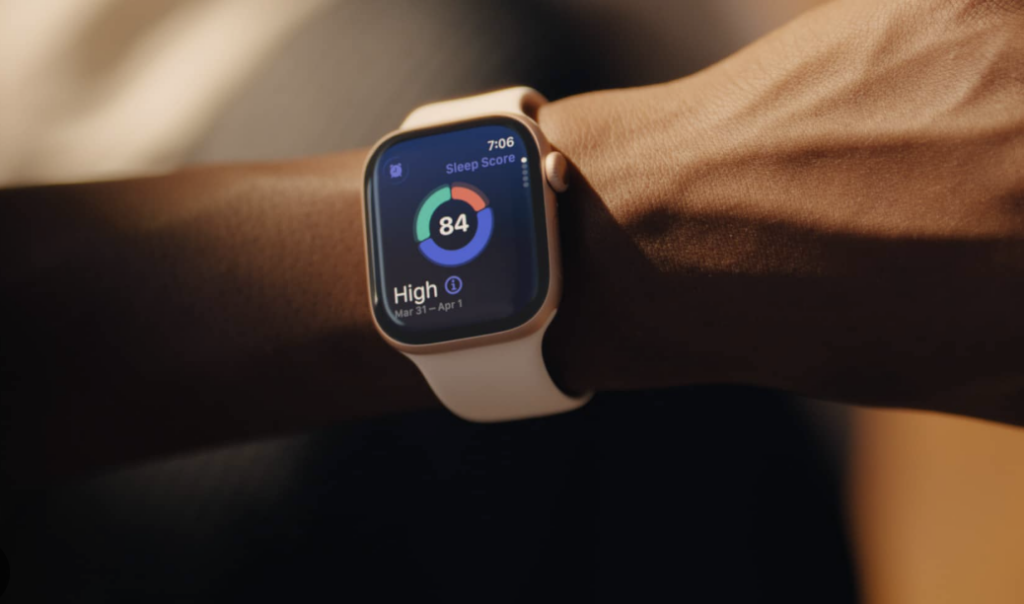
For iPhone users who don’t need the rugged Ultra, the Apple Watch Series 11 (2025) is the mainstream choice. It includes the same health suite as Ultra – ECG, AFib detection, blood-oxygen, fall-detection, advanced sleep analysis (including apnea detection) – and now adds new watchOS 10/11 features like daytime blood-pressure alerts. Its battery is shorter (about 24 hours under normal use), but it charges fast. The Series 11 is available in 41mm and 45mm cases, in aluminum or stainless steel, with colorful new case colors.
Series 11’s design is very similar to Series 9, but its software is updated. It still requires an iPhone, but it’s less expensive than Ultra. Its heart-rate sensor is very accurate, and it now includes on-device sleep monitoring with optional Advanced Sleep (with apnea). All Apple Watches have the core health tracking features built-in; Series 11 just offers the full set in a more compact package. In our view, the Series 11 is the best Apple Watch balance of price and performance for health monitoring and everyday use. It’s comfortable to wear 24/7, syncs smoothly to Apple’s Health app, and leverages Apple’s ecosystem of health and fitness apps.
Key Features at a Glance
| Feature | Details |
|---|---|
| Case & Build | 41mm or 45mm case, aluminum or stainless steel |
| OS / Compatibility | watchOS 10/11, iOS only |
| Health Tracking Features | ECG with AFib alerts, blood oxygen, fall detection, advanced sleep tracking (including apnea), daytime blood-pressure alerts |
| Sensors | Heart rate, SpO₂, ECG, accelerometer, GPS |
| Battery Life | Approximately 24 hours |
| Special Features | Fast charging, compact design, seamless integration with Apple Health and Fitness apps |
| Connectivity | Wi-Fi, Bluetooth, LTE |
Pros and Cons
Pros:
- Full health monitoring suite like Ultra
- Compact and comfortable for everyday use
- Fast charging compensates for shorter battery
- Colorful case options
- Syncs with Apple Health ecosystem
Cons:
- Shorter battery life than Ultra
- iOS only
- Fewer rugged/outdoor features
Quick Summary
- Best for: iPhone users wanting a full health tracking smartwatch without the bulk or premium cost of Ultra
- Who it’s ideal for: Everyday wear, casual fitness, and those tracking sleep and cardiovascular health
- Bottom line: Series 11 offers the ideal balance of price, performance, and smartwatch features for health, making it the mainstream choice for iPhone users.
Samsung Galaxy Watch Ultra (2025) – Rugged Android Health Watch
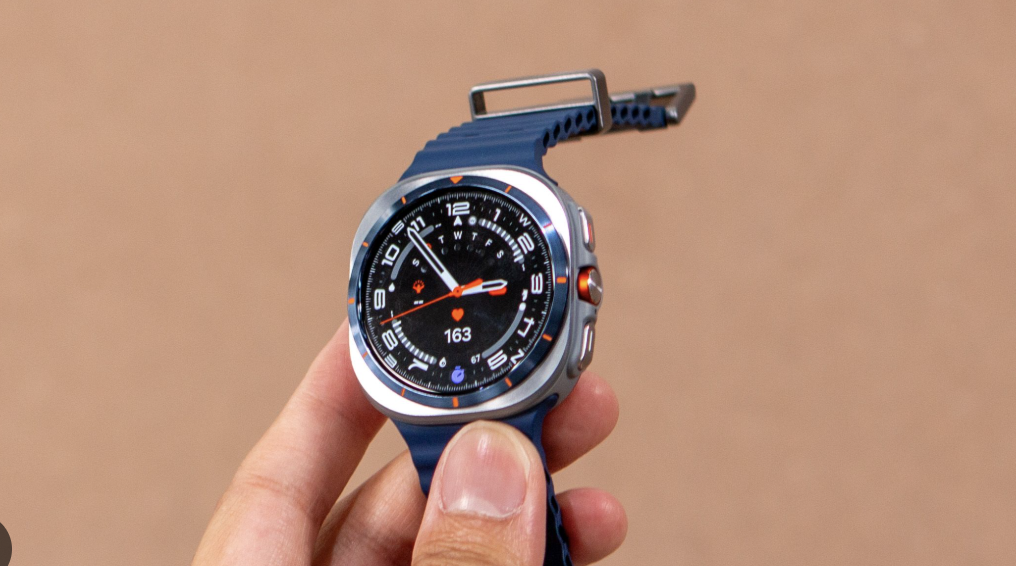
Samsung’s new Galaxy Watch Ultra (2025) is the Android counterpart to the Apple Ultra. It’s a 47mm titanium watch rated for 10 ATM water resistance and extreme conditions (survives up to 9000 m altitude, 55 °C heat). It runs Wear OS with Samsung’s One UI Watch 6, and works with any Android phone (especially Samsung phones).
It brings advanced health tracking features: a built-in ECG app for atrial fibrillation, optical SpO₂ sensor, and Samsung’s new cuffless blood-pressure monitoring. The Ultra can even measure body composition (via bioelectrical impedance) and energy levels. If it detects an irregular heart rhythm, the watch will prompt you to take a medical-grade ECG on the spot. It also tracks sleep stages and stress and has fall/incident detection.
Connectivity is robust: it comes with LTE, Wi-Fi, Bluetooth, and GPS (including dual-band GNSS for accuracy). One major improvement is battery life – Samsung claims it’s their best yet – and in practice it comfortably lasts 2–3 days in mixed use. The display is a bright 2.5″ AMOLED (1000 nits) with large fonts, and the watch has a speaker and dual microphones for clear calls. Samsung also added AI-powered health coaching and GPS mapping/wayfinding. We found it very capable for tracking long outdoor hikes or runs, and like the Ultra 3 it even includes a built-in flashlight.
Key Features at a Glance
| Feature | Details |
|---|---|
| Case & Build | 47mm titanium case, 10 ATM water resistance, rugged outdoor-focused design |
| OS / Compatibility | Wear OS 6, Android (optimized for Samsung phones) |
| Health Tracking Features | ECG (AFib detection), blood oxygen, cuffless blood pressure, body composition, energy levels, sleep stages, stress tracking, fall detection |
| Sensors | Heart rate, SpO₂, ECG, accelerometer, GPS/GNSS |
| Battery Life | Approximately 2–3 days with mixed use |
| Special Features | AI-powered health coaching, GPS mapping and wayfinding, built-in flashlight, bright AMOLED display (1000 nits) |
| Connectivity | LTE, Wi-Fi, Bluetooth, GPS |
Pros and Cons
Pros:
- Rugged, durable build for extreme conditions
- Comprehensive health monitoring sensors
- LTE and satellite connectivity
- Bright, clear AMOLED display
- Useful features for outdoor activities (flashlight, GPS navigation)
Cons:
- Large and heavy (47mm)
- Only one hardware size
- Samsung Health app works best on Samsung phones
Quick Summary
- Best for: Android users who want a top-tier smartwatch for health monitoring with rugged durability
- Who it’s ideal for: Outdoor enthusiasts, hikers, athletes, and anyone tracking advanced health metrics
- Bottom line: The Samsung Galaxy Watch Ultra (2025) is unmatched for Android users seeking all-day health tracking, GPS navigation, and extreme durability in a single smartwatch.
Samsung Galaxy Watch 8 – All-Round Android Health Watch
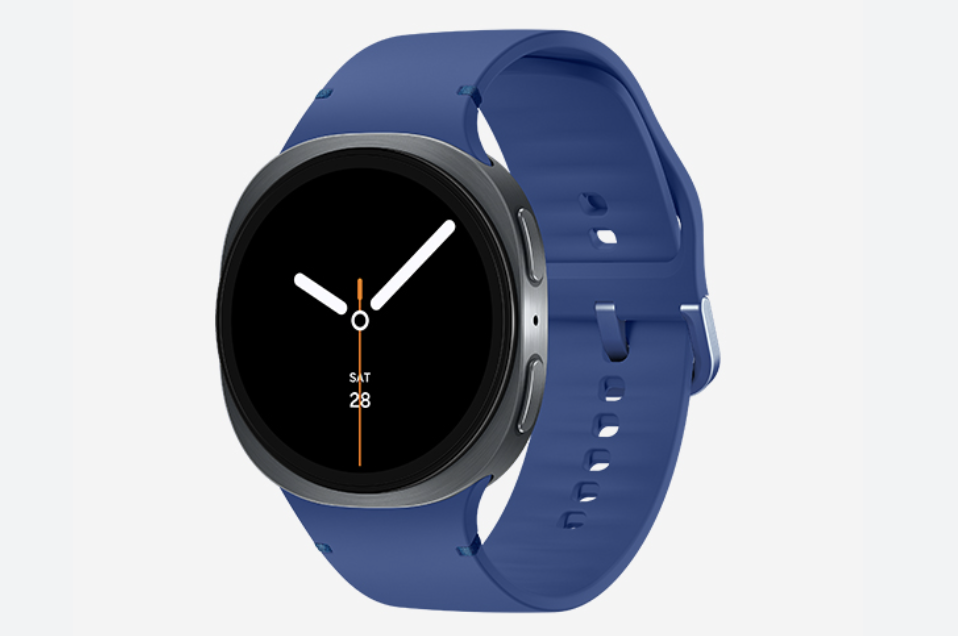
The Galaxy Watch 8 (2024) is Samsung’s general-purpose smartwatch for Android users. It’s essentially a slimmer version of the Ultra in a more compact 41 mm (and 45 mm) case. It runs Wear OS 6 and offers the same health monitoring features: ECG, SpO₂, sleep tracking with advanced metrics, and even fall detection. Samsung has also added sleep apnea detection (via SpO₂), similar to Apple. The Watch 8 comes in aluminum, stainless steel, or titanium (Classic model) finishes.
In our testing, it reliably tracked heart rate, blood oxygen, and sleep, and offered guided breathing, stress alerts, and a first-in-class “antioxidant index” metric.
Battery is rated up to 30 hours (about 1–2 days under normal use). It supports wireless charging and PowerShare from Samsung phones. The 1.4″ AMOLED display is vivid and always-on. On the downside, battery life and durability are not as high as the Ultra’s, and it works best with Samsung phones (no iPhone support).
For most Android users, the Galaxy Watch 8 is an excellent all-rounder. It adds run coaching, body composition tracking, and smart reminders, and Samsung’s ecosystem (Galaxy Find, Samsung Pay, etc.) feels polished. It offers multiday battery life and a robust fitness and health tracking suite. In short, it’s a solid daily wearable with most of the Ultra’s health smarts at a lower cost.
Key Features at a Glance
| Feature | Details |
|---|---|
| Case & Build | 41 mm / 45 mm case, available in aluminum, stainless steel, or titanium |
| OS / Compatibility | Wear OS 6, Android (best experience with Samsung phones) |
| Health Tracking Features | ECG (AFib detection), blood oxygen (SpO₂), advanced sleep tracking with apnea detection, fall detection, stress monitoring, antioxidant index |
| Battery Life | Up to 30 hours (approximately 1–2 days of typical use) |
| Display | 1.4″ AMOLED display with always-on mode |
| Connectivity | Bluetooth, Wi-Fi, LTE, NFC (Samsung Pay) |
| Special Features | Run coaching, body composition analysis, smart reminders, wireless charging, PowerShare support |
Pros and Cons
Pros:
- Compact and lighter than Galaxy Watch Ultra
- Full suite of health monitoring features
- Sleek, stylish design with multiple case finishes
- Always-on AMOLED display
- Samsung ecosystem integration (Galaxy Pay, Find My Watch, etc.)
Cons:
- Shorter battery life than Galaxy Watch Ultra
- Works best with Samsung phones (no iPhone support)
- Slightly less rugged than Ultra model
Quick Summary
- Best for: Android users seeking a smartwatch for health monitoring with a compact form factor
- Who it’s ideal for: Daily use, casual fitness, sleep & stress tracking, and Samsung ecosystem users
- Bottom line: The Galaxy Watch 8 offers almost all the health and fitness features of the Ultra in a smaller, more affordable package. It’s ideal for everyday wear with strong health tracking and fitness features.
Google Pixel Watch 4 – Best for Pixel/Android Users
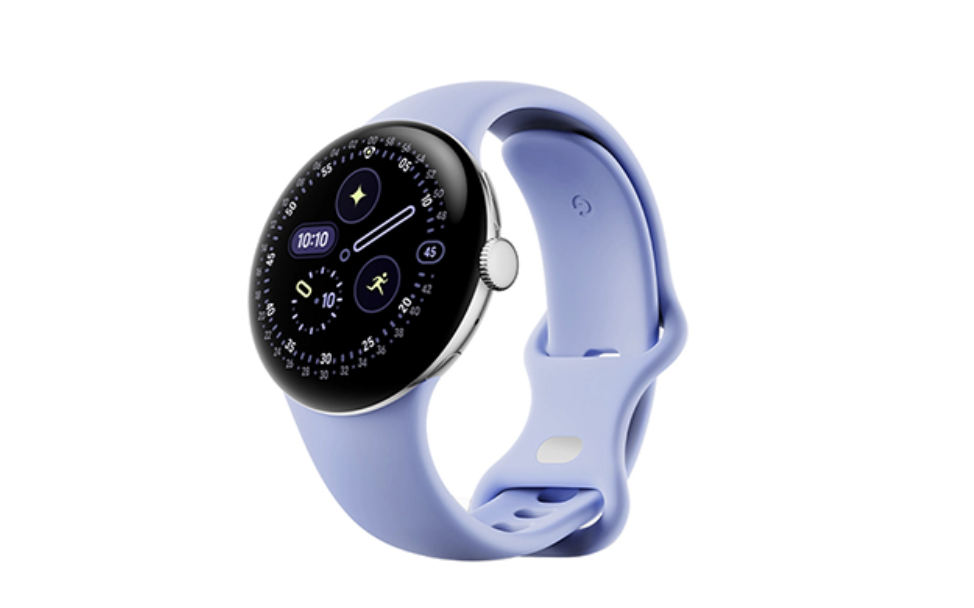
Google’s Pixel Watch 4 (2024) is the flagship Wear OS device for Android and Pixel phone users. It inherits the Pixel Watch style with a round dome glass, available in 41 mm and 45 mm sizes. It runs Wear OS 6 with Google’s Tensor G4 chipset, giving access to native Google apps – Maps, Wallet (Google Pay), Assistant, Gmail, and more – directly on your wrist.
Health tracking is powered by Fitbit: continuous heart rate, built-in GPS, sleep stages (with SpO₂ on v4), ECG for AFib detection, and Fitbit’s stress & temperature sensing. Google touts Pixel Watch 4 as their “most refined generation yet,” with improved health tracking features and stronger battery life.
Performance & Battery
- Battery lasts about 36–40 hours per charge (1–2 days)
- Battery-saver mode extends runtime further
- Heart-rate and sleep tracking are highly accurate, benefiting from Fitbit integration
Display & Design
- Bright AMOLED screen with elegant, round dome glass
- Sleek design suitable for everyday wear
- Available in 41 mm and 45 mm sizes
Connectivity & Compatibility
- Works best with Android, especially Pixel phones
- Some health features (like ECG) require a compatible Pixel phone
- Limited third-party app selection compared to Apple and Samsung
Key Features at a Glance
| Feature | Details |
|---|---|
| Case & Build | 41 mm / 45 mm case, round dome glass design |
| OS / Compatibility | Wear OS 6, Android (best experience with Pixel phones) |
| Health Tracking Features | Continuous heart rate, ECG (AFib detection), blood oxygen (SpO₂), sleep stages, stress and skin temperature monitoring, Fitbit analytics |
| Battery Life | Approximately 36–40 hours (around 1–2 days of use) |
| Display | Bright AMOLED display with elegant round form factor |
| Connectivity | Bluetooth, Wi-Fi, LTE, NFC (Google Wallet) |
| Special Features | Native Google apps, integrated GPS tracking, battery-saver mode |
Pros and Cons
Pros:
- Full Fitbit-powered health tracking features
- Native Google apps on wrist
- Elegant, compact design for everyday wear
- Reliable heart-rate and sleep data
Cons:
- Limited third-party apps
- Some health features require Pixel phone pairing
- Battery life shorter than some endurance-focused smartwatches
Quick Summary
- Best for: Android users, especially Pixel phone owners, looking for a smartwatch for health monitoring
- Ideal use: Daily activity, sleep & stress tracking, and full Google integration
- Bottom line: The Pixel Watch 4 combines Fitbit’s accurate health tracking with Google’s smart ecosystem. It’s a capable smartwatch for Android users who want detailed health metrics, elegant design, and Google apps on the wrist.
Garmin Venu 4 – Fitness-Focused Smartwatch
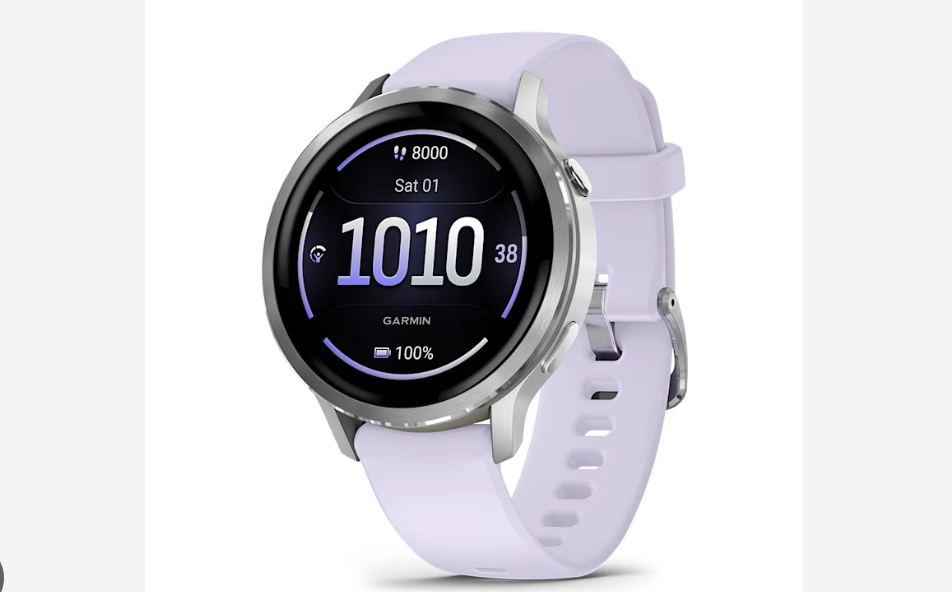
The Garmin Venu 4 (2023/2024) is designed for fitness enthusiasts. It features an AMOLED display, available in 41 mm and 45 mm sizes, and focuses on both health tracking and performance data.
It includes GPS, continuous heart-rate monitoring, SpO₂, Sleep Score, stress tracking, and Body Battery metrics. New features like Health Status trends and “Lifestyle Logging” allow users to monitor long-term wellness. In practice, it tracked workouts and recovery reliably, and the built-in fitness apps (running coach, gym workouts) are excellent. The Venu 4’s battery is impressive, lasting over a week with daily GPS use. This enables continuous tracking of fitness metrics and sleep without frequent recharging.
Performance & Battery
- Over a week of battery life in mixed use with daily GPS
- Accurate tracking of workouts, recovery, sleep, and stress
- Battery longevity allows multi-day health and fitness monitoring
Design & Display
- AMOLED screen, 41 mm or 45 mm
- Sleek, modern design with a watch-like feel
- Lightweight for daily wear
Connectivity & Features
- Supports Garmin Pay (NFC payments)
- Music storage available on 45 mm model
- Lacks cellular connectivity; smaller app selection compared to Wear OS
Key Health & Fitness Features
| Feature | Details |
|---|---|
| Case & Display | 41 mm / 45 mm, AMOLED screen |
| OS / Compatibility | Garmin OS, compatible with all phones |
| Health & Fitness Tracking | GPS, heart-rate, SpO₂, Sleep Score, stress, Body Battery, Health Status trends, Lifestyle Logging |
| Battery Life | 1+ week (mixed use with GPS daily) |
| Connectivity | Bluetooth, Garmin Pay, music storage |
| Special Features | Built-in fitness apps (running coach, gym workouts), accurate multi-day health tracking |
Pros and Cons
Pros:
- Extensive health tracking and fitness features
- Long battery life for continuous monitoring
- Sleek, watch-like design suitable for everyday wear
- Reliable workout and recovery tracking
Cons:
- No cellular connectivity
- Smaller third-party app ecosystem than Wear OS
Quick Summary
- Best for: Fitness enthusiasts who want a smartwatch for health monitoring with long battery life
- Ideal use: Daily workouts, sleep & stress tracking, and multi-day health monitoring
- Bottom line: The Garmin Venu 4 combines pro-level fitness tracking with a stylish, modern smartwatch design. Its long battery life and accuracy make it ideal for users who want a reliable health monitoring smartwatch without daily charging.
Garmin Enduro 2 – Ultra-Endurance GPS Watch
The Garmin Enduro 2 is a niche powerhouse: a 51 mm super-watch with solar charging, built for ultra-runners, adventurers, and extreme outdoor use. Its standout feature is battery life—Garmin claims, and testing confirms, well over 100 hours of continuous GPS tracking with solar, the longest of any Garmin. Outside GPS mode, it can last weeks in watch mode.
It includes every Garmin feature: multi-band GNSS for top GPS accuracy, optical heart rate (and Pulse Ox), altimeter, barometer, compass, and advanced training modes such as climb pro and expedition mode. If you need the ultimate endurance smartwatch, even surpassing the Fenix series, the Enduro 2 is unmatched.
The trade-offs are size, weight, and cost: at 51 mm, it’s very large and heavy, and it comes at a premium price. But for extreme outdoor use, no other watch matches its runtime, durability, and performance.
Performance & Battery
- GPS Tracking: Over 100 hours continuous GPS with solar charging
- Watch Mode: Lasts multiple weeks without GPS
- Advanced Features: Climb Pro, expedition mode, multi-band GNSS
- Target Users: Ultra-runners, endurance athletes, adventurers
Design & Build
- Case Size: 51 mm, rugged and heavy-duty
- Durability: Designed for extreme outdoor conditions
- Materials: High-quality, sturdy construction for outdoor use
Health & Fitness Features
| Feature | Details |
|---|---|
| Health Tracking | Optical heart rate, Pulse Ox, stress tracking |
| GPS & Navigation | Multi-band GNSS, altimeter, barometer, compass |
| Training Features | Climb Pro, expedition mode, advanced endurance tracking |
| Battery Life | 100+ hours GPS (solar), weeks in watch mode |
| Special Features | Solar charging, extreme durability |
Pros and Cons
Pros:
- Extremely long battery life, unmatched for endurance tracking
- Solar charging extends outdoor usability
- Full suite of Garmin GPS, navigation, and training features
- Rugged and reliable for extreme environments
Cons:
- Very large and heavy (51 mm)
- High cost compared to standard smartwatches
Quick Summary
- Best for: Endurance athletes, ultra-runners, and outdoor adventurers
- Ideal Use: Long multi-day hikes, GPS navigation, extreme outdoor activities
- Bottom line: The Garmin Enduro 2 is the ultimate ultra-endurance smartwatch, combining extreme battery life, rugged design, and comprehensive health & navigation features for serious outdoor enthusiasts.
Fitbit Charge 6 (and Sense 2) – Fitness Trackers with Health Sensors
Fitbit’s wearable lineup (now owned by Google) continues to focus on fitness and health for everyday users. The Charge 6 fitness band and Sense 2 smartwatch include:
- ECG sensor for AFib detection
- SpO₂ sensor for blood oxygen monitoring
- Temperature sensor (first time in Fitbit bands)
- Step and calorie tracking
- Heart rate with sleep stages
- Stress tracking via electrodermal activity (EDA)
In testing, the Charge 6 battery lasts 5–6 days per charge, outperforming most standard smartwatches. Fitbit devices sync with any phone via the Fitbit app, making them highly cross-compatible.
The screen and features are more limited than premium smartwatches (no native third-party apps), but they cover the essentials of health tracking at a lower price. For users seeking reliable step, sleep, and ECG tracking on a budget, Fitbit remains a strong option.
Performance & Battery
- Battery Life: 5–6 days per charge
- Health Tracking: Continuous heart rate, ECG, SpO₂, stress (EDA), sleep stages, temperature
- Sync: Works with all phones via Fitbit app
- Ideal Users: Everyday users focused on fitness and basic health metrics
Design & Compatibility
| Feature | Details |
| Wearable Type | Fitness band (Charge 6) & smartwatch (Sense 2) |
| Screen & UI | Limited compared to premium smartwatches |
| Compatibility | Works with Android and iOS via Fitbit app |
| Special Features | ECG, SpO₂, temperature sensor, sleep & stress monitoring |
Pros and Cons
Pros:
- Long battery life (5–6 days)
- Comprehensive fitness & basic health tracking
- Cross-compatible with Android and iOS
- Budget-friendly alternative to premium smartwatches
Cons:
- Limited display and app support
- Lacks advanced smartwatch features
Quick Summary
- Best for: Budget-conscious users who want reliable health and fitness tracking
- Ideal Use: Daily activity, sleep tracking, ECG & stress monitoring
- Bottom line: Fitbit Charge 6 and Sense 2 provide accurate health tracking in a simple, affordable package, making them a practical choice for users not needing premium smartwatch features.
Amazfit Active 2 – Best Affordable Smartwatch
At $99, the Amazfit Active 2 is a feature-packed budget wearable. It comes with:
- Stainless-steel case and bright 1.9″ AMOLED display
- Health sensors: heart rate, SpO₂, stress monitoring, skin temperature
- Built-in GPS for workouts
- Detailed sleep stages and activity tracking via Zepp app
- Tracks dozens of sports modes and provides basic workout coaching
- Lacks an app store and ECG but includes premium wellness sensors (stress via HRV)
The battery lasts up to 10 days per charge, and in practice we observed a full week of mixed use. Despite being budget-friendly, the Active 2 covers the essentials of health and fitness tracking, making it a strong choice for cost-conscious users.
Performance & Battery
- Battery Life: Up to 10 days per charge
- Health Tracking: Heart rate, SpO₂, stress (HRV), skin temperature
- GPS: Built-in for workouts and outdoor tracking
- Sleep & Activity: Detailed via Zepp app
- Ideal Users: Budget-conscious fitness enthusiasts
Design & Compatibility
| Feature | Details |
| Wearable Type | Smartwatch |
| Case & Display | Stainless steel, 1.9″ AMOLED |
| Compatibility | Android & iOS via Zepp app |
| Special Features | Multiple sports modes, stress tracking, sleep monitoring |
Pros and Cons
Pros:
- Very affordable and capable
- Long battery life (up to 10 days)
- Includes multiple health sensors for basic wellness
- Built-in GPS and activity tracking
Cons:
- No ECG support
- Lacks app store and some premium smartwatch features
Quick Summary
- Best for: Users seeking a budget-friendly, reliable health and fitness tracker
- Ideal Use: Everyday fitness tracking, sleep monitoring, stress tracking
- Bottom line: Amazfit Active 2 offers solid health tracking at a low cost, making it one of the best inexpensive smartwatches available.
Withings ScanWatch 2 – Health-Focused Hybrid Watch
The Withings ScanWatch 2 (2025 edition) is a hybrid analog/digital smartwatch. At casual glance, it looks like a traditional watch, but underneath the analog hands lies a health sensor suite:
- Medical-grade ECG on demand
- SpO₂ (blood oxygen monitoring)
- Continuous heart rate tracking
- Skin temperature sensor for long-term trends
- Sleep tracking with apnea screening
It can detect atrial fibrillation automatically and uses FDA-cleared algorithms for AFib alerts. The big advantage is battery life: in testing, Withings’ hybrids last up to 35 days between charges, allowing continuous health monitoring without daily charging.
The trade-off: no GPS or smartphone apps beyond basic Bluetooth sync. But if you want a classic watch form factor with serious health monitoring, the ScanWatch 2 is unique. It provides continuous ECG/SpO₂ and long-term trend data that most smartwatches don’t, all in a wearable, stylish package.
Performance & Battery
- Battery Life: Up to 35 days
- Health Tracking: ECG, SpO₂, heart rate, skin temperature, sleep tracking (apnea screening)
- GPS: Not included
- Ideal Users: Those who want a classic watch look with comprehensive health monitoring
Design & Compatibility
| Feature | Details |
| Wearable Type | Hybrid analog/digital smartwatch |
| Case & Display | Classic analog design with integrated digital display |
| Compatibility | iOS & Android via Bluetooth sync |
| Special Features | Continuous ECG/SpO₂, FDA-cleared AFib alerts, long battery life |
Pros and Cons
Pros:
- Longest battery life among smartwatches (up to 35 days)
- Continuous health monitoring including ECG and SpO₂
- Classic watch design, wearable day and night
- Sleep tracking with apnea screening
Cons:
- No GPS or standalone smartphone apps
- Limited smart notifications
Quick Summary
- Best for: Users wanting classic watch aesthetics with advanced health tracking
- Ideal Use: Continuous health monitoring, sleep tracking, AFib alerts
- Bottom line: Withings ScanWatch 2 uniquely combines a traditional watch look with professional-grade health monitoring, ideal for long-term wellness tracking.
Key Health & Fitness Features to Consider
When choosing a health smartwatch, look beyond just brand and design. Compare the sensors and wellness features offered:
- Heart rate & ECG: All modern smartwatches include continuous heart-rate monitoring. Many (Apple, Samsung, Garmin, Fitbit, Withings) add an ECG app for atrial-fibrillation detection. This can alert you to irregular heart rhythms.
- Blood oxygen (SpO₂): Most include an SpO₂ sensor (especially Wear OS and Fitbit models). This is useful for sleep analysis and altitude. Advanced watches (Apple Watch, Galaxy Watch, Garmin Venu) even use SpO₂ to detect sleep apnea.
- Sleep tracking: All track sleep duration and stages via motion and HRV. Top devices also offer sleep scores and advanced analytics (detecting apnea events or restlessness).
- Stress and wellness: Some watches (Fitbit Sense, Garmin, Amazfit) monitor stress via heart-rate variability or EDA (skin conductance)android. They may guide you through breathing exercises. Oura and Fitbit also provide “readiness” or “stress” scores based on your data.
- Women’s health: Most platforms now include menstrual cycle logging and alerts (e.g. Apple Watches Series 8+ do cycle tracking). No watch is exclusively for women, but size and strap options vary (Garmin Lily is designed for smaller wrists).
- Body sensors: Samsung’s watches can estimate body composition (muscle/fat %) and blood pressure (with cuff). Garmin has “Body Battery” to estimate energy. These can give extra data points for your health.
- Fitness features: All devices count steps/calories. For training, look for GPS accuracy and workout modes. Garmin leads in sports features (multi-GNSS, training load, VO₂max, recovery time). Wear OS/Apple offer guided workouts and running coaches.
- Connectivity & apps: Apple Watch pairs only with iPhone, but has the richest app ecosystem and Apple Fitness+. Wear OS watches (Samsung, Pixel, OnePlus) work with any Android and support Google apps (Maps, Wallet, Assistant) and many third-party apps. Wear OS also now offers Google Wallet and Google Maps right on the watch. Fitbit works with any phone via the Fitbit app (though its notifications/apps are more limited). Garmin and Withings have their own apps and stores, with fewer third-party apps but often have contactless payment (Garmin Pay, Samsung Wallet/Google Pay).
- Battery life: This is crucial. Basic smartwatches (Apple/Samsung/Pixel) typically last 1–2 days. Extended-life models (Garmin, hybrid watches) can last a week or more. For example, OnePlus Watch 3 (Wear OS) can reach 5 days, and Garmin Enduro 2 goes beyond 100 hours with GPS. Decide if you prefer daily charging or multi-day endurance.
- Safety features: Many high-end watches have fall detection (Apple) or incident detection (some Garmins) to alert contacts in a crash or fall. This can be vital for seniors or lone runners. All Apple Watches and recent Galaxy Watches have fall/AFib alerts built-in.
- Comfort & form factor: Watch size/weight affects wearability. People with smaller wrists may prefer a 40mm vs 47mm case. “Hybrid” watches like Withings look traditional and have huge battery. Smart rings (Oura) are even more discreet. Consider how you’ll use it 24/7 (some wearables are bulky or metal, others are light).
- Price & extras: Finally, set your budget. Premium smartwatches (Apple, Garmin, Samsung) cost $300–800, while basic fitness bands (Fitbit, Garmin Vivosmart) cost ~$100–200. Many devices offer optional premium subscriptions (Fitbit Premium, Garmin Premium, Oura membership) for advanced analytics and training plans. You can start without them, but factor that into the cost if you want the full experience.
Conclusion
There is no one-size-fits-all best smartwatch for health monitoring. The right choice depends on your phone, lifestyle, and priorities. For iPhone users, the Apple Watch Ultra 3 or Series 11 are unmatched in sensors and ecosystem. For Android, the Galaxy Watch Ultra brings equivalent health features (and even stress/body comp), while the Pixel Watch 4 offers deep Fitbit analytics with Google smarts. If you prioritize fitness data and battery life, Garmin’s Venu 4 or Enduro 2 deliver unrivaled accuracy and multi-day endurance. For light tracking or budgets, the Fitbit and Amazfit devices cover all the basics well. And if you want something different, a hybrid watch like Withings or a smart ring like Oura can round out your wearable health setup.
In any case, these devices turn your wrist (or finger) into a personal health hub, collecting daily health data (heart rate, sleep, activity) and helping you stay on top of your well-being. When choosing, consider which health metrics matter most to you (heart health, sleep, stress, etc.), and pick a device that gives you accurate tracking plus the convenience and comfort you need. All our top picks have proven track records and expert reviews, so you can confidently shop on Amazon or other retailers knowing you’re getting a capable health-monitoring smartwatch. Happy tracking, and here’s to a healthier 2026!
FAQs: Best smartwatch for health monitoring
Can smartwatches really track health accurately?
Many buyers worry if a smartwatch is just a fitness tracker or if the heart rate and ECG function actually give useful health data. Modern health‑focused smartwatches are good at tracking trends like heart rate, steps, sleep patterns, and blood oxygen over time, but they are not a medical device and cannot replace clinical instruments. They are best used to monitor patterns and encourage healthier habits.
Do sleep tracking and advanced sleep monitoring actually work?
Sleep tracking is one of the most‑used health tracking features for smartwatch owners, but many people report that sleep stages and sleep apnea indicators can vary in accuracy. Smartwatches use heart rate, movement, and sometimes skin temperature to estimate sleep quality, which is helpful for trends but falls short of clinical sleep studies.
How important is battery life if I want continuous health monitoring?
Battery life is a top concern. Many feature‑rich smartwatches offer detailed health monitoring and connected fitness tracking, but these can drain the battery quickly, especially with sleep monitoring enabled. Devices with long battery life — like endurance‑focused models — can track activity, heart rate, and sleep for multiple days without charging, which is crucial if you want 24/7 health data.
Will the health data help me make real changes to my healthy lifestyle?
People often worry whether the data a watch collects actually means anything. Smartwatches are best for giving context about daily activity, heart rate trends, sleep patterns and stress levels. They can help you set goals, see how fitness tracking affects your health, and motivate changes. However, if you have specific medical concerns, you should still consult healthcare professionals rather than rely solely on wearable data.
Are health tracking features like ECG and blood oxygen worth the upgrade?
Many buyers ask whether advanced sensors like ECG, heart rate tracking, and blood oxygen (SpO₂) add real value. These features can provide extra insights into your cardiovascular health and can alert you to irregularities early, but they’re most useful as trend data rather than precise diagnostics. For most people, the combination of heart rate, blood oxygen, sleep tracking, and activity tracking delivers meaningful health insights.